
PAVER INSTALLATION IN SUFFOLK COUNTY
Paver Installation & Sealing in Suffolk County, A Surface That Performs as Well as It Looks.
Brick paver, concrete paver, bluestone, and natural stone installation and sealing for driveways, walkways, patios, and entryways across Suffolk County and Nassau County. Built on the right base — every time.
4.6/5 Google Rating
· BBB A+ Since 2012
· Licensed in Suffolk & Nassau County
BBB A+ Accredited
Since 2012
Dan's Best of the Best
2025 Winner
Suffolk County Licensed
Contractor License
Nassau County Licensed
Contractor License
Fully Insured
General Liability + Workers Comp
WHY MOST PAVER JOBS FAIL
A Paver Job That Looks Good on Day One and Shifts After the First Year Isn't a Paver Problem, It's a Base Problem
Suffolk County sits on sandy, loamy soil — especially in areas like Deer Park and West Babylon. That soil drains well, but it shifts. A proper paver installation accounts for that movement from day one — not as an afterthought.
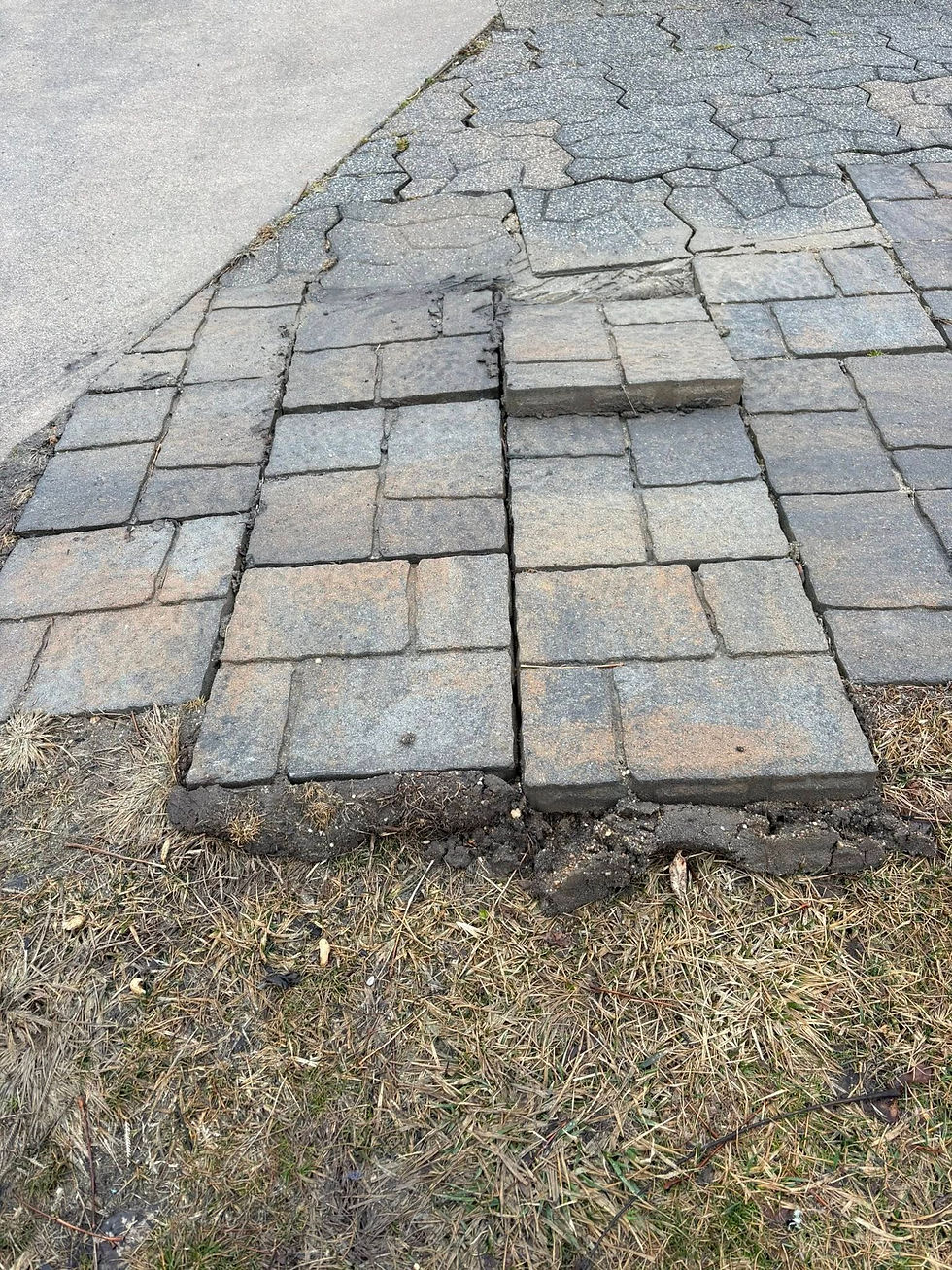
Most paver failures in Suffolk County don't start with bad pavers. They start with shallow excavation, rushed compaction, or a base layer that wasn't engineered for the load the surface carries. The pavers look perfect for a year. Then one section sinks. Then another rocks underfoot. Then the pattern starts breaking apart at the edges.
We've seen it regularly — paver jobs installed on weak bases that needed full rebuilding within a few seasons. Every Fiorini paver installation starts with the correct excavation depth, the correct base material, and the correct compaction process — performed by our own crew with our own equipment. No subcontractors. No shortcuts passed down the chain.
A driveway in Suffolk County requires 12 to 14 inches of excavation before a single paver goes down. A patio or walkway needs 6 to 8 inches. These are not guidelines — they're the minimum required to survive Long Island's soil conditions.
THE FULL PROCESS
What Paver Installation Actually Involves on a Suffolk County Property
Every step in this sequence exists to protect your investment. When we set the first paver down, the ground beneath it has already been engineered to hold.
01
Site Evaluation & Grade Assessment
We start by evaluating the natural grade and drainage of your property. Suffolk County properties — especially in low-lying areas like West Babylon, Bay Shore, and Lindenhurst — can have drainage challenges that aren't obvious until you dig. We identify where water flows and grade the sub-base so water moves away from your home or structure.
02
Excavation to Correct Depth
We remove the existing surface — old asphalt, cracked concrete, overgrown sod, or compacted dirt. Driveway: 12 to 14 inches. Patio or walkway: 6 to 8 inches. Going shallow is the single most common reason pavers sink within a few seasons. We measure depth — we don't guess.
03
Sub-Base Compaction in Layers
Processed gravel — dense-graded aggregate — installed and compacted in layers with a plate compactor. Each layer compressed before the next goes down. One pass isn't enough. This is where most contractors cut time. We don't. A weak sub-base means a failing surface regardless of paver quality.
04
Bedding Sand Layer
One inch of coarse concrete sand screeded to a consistent depth over the compacted base. This layer gives each paver a stable, level seat and allows for fine-tuning the grade so water runs away from your home. In coastal Suffolk County areas near the Great South Bay, this layer is critical — sandy native soil is unstable on its own.
05
Paver Placement & Pattern Cutting
Starting from a straight edge — building face or string line — and working outward. Cuts happen at borders using a wet saw or splitter. Clean cuts matter. Ragged edges let joint sand escape and allow pavers to rock over time. Edge restraints spiked into the compacted base hold the entire field in place — non-negotiable on driveways under vehicle load.
06
Polymeric Sand & Final Compaction
Polymeric sand swept into every joint, then the plate compactor run over the entire surface one final time to vibrate sand into every gap. The surface is then misted to activate the binding agents — polymeric sand hardens like grout once cured, resisting weed germination and ant intrusion. One of the most skipped steps in the industry. We don't skip it.
07
Sealing (Optional but Recommended)
Paver sealing applied after full installation and cure. Sealer enhances color, hardens the joint sand further, and protects against staining and moisture intrusion. Particularly important for lighter-colored pavers and any surface near the South Shore where salt air accelerates surface degradation.
MATERIAL OPTIONS
Five Paver Materials We Install Across Suffolk County — and What Each One Does Best
The right material depends on your property, your soil, and how you use the space. Suffolk County's climate and soil conditions affect every material differently.
MOST VERSATILE
Concrete Pavers
The most common choice we install across Suffolk County. Dozens of shapes, sizes, and colors. Individual units flex slightly without cracking the whole surface — handling temperature changes and ground movement better than poured concrete slabs. Strong for driveways, patios, and walkways.
CLASSIC LONG ISLAND
Natural Bluestone
A classic on Long Island next to colonial and cape-style homes. Weathers well, holds up in high-traffic areas, and keeps its appearance over decades. Does require periodic re-leveling as the ground settles, but overall a strong performer in both residential and commercial applications.
TRADITIONAL LOOK
Brick Pavers
A strong performer in older neighborhoods where the home's architecture calls for a traditional look. Holds color well over time. Resists cracking when installed on a properly compacted base. A go-to for front entry driveways and walkways where character matters.
POOL & PATIO
Travertine
Popular around pools and outdoor living areas. Stays cooler underfoot than concrete in direct summer sun. More refined appearance — requires proper sealing to handle Suffolk County's wet seasons. Best for patios and pool decks with the right base preparation.
LOW — ACT THIS SEASON
Porcelain Pavers
Growing in popularity for modern outdoor spaces. Dense, low-maintenance, resistant to staining. Works well on patios and pool decks. Requires a very stable base — less forgiving of any sub-base movement than concrete or brick pavers. Not the right choice for high-load driveways.
Why Paver Sealing Matters, and What It Actually Does
Paver sealing is one of the most overlooked steps after installation — and one of the most impactful for long-term performance.
A quality paver sealer does several things at once. It enhances and deepens the color of your pavers — particularly important for older installations where fading has dulled the original appearance. It hardens the polymeric sand in the joints further, reducing weed growth and ant tunneling below the surface. And it creates a moisture barrier that protects against the water infiltration that causes pavers to heave, shift, and stain over time.
In coastal Suffolk County areas near the South Shore — Bay Shore, Islip, Babylon — salt air accelerates surface degradation on unsealed pavers significantly faster than inland properties. Sealing is particularly important in those locations.
For most paver surfaces on Long Island, sealing every three to five years is the right maintenance interval. We apply sealer after full installation cure — typically 30 to 90 days after completion depending on the material — and can re-seal existing installations that have never been sealed or that are due for renewal.
ADDITIONAL PROJECT
The Paver Installation Contractor Suffolk County Properties Trust
1971
Serving Long Island
Paver installation across Suffolk County since the late 1980s. We know what happens to pavers installed on shallow bases in Long Island's soil — and we've rebuilt many of them. That experience is in every base spec we write.
850+
Driveways Installed Across Long Island
850-plus driveways installed, replaced, or reconstructed on Long Island — asphalt, concrete, and paver installations for residential and commercial properties across Suffolk County and Nassau County.
1,500+
Properties Served Across Long Island
From commercial parking lots and industrial facilities to HOA communities and substantial residential properties — 1,500-plus Long Island properties served with our own crews and our own equipment since the late 1980s.
ADDITIONAL PROJECT
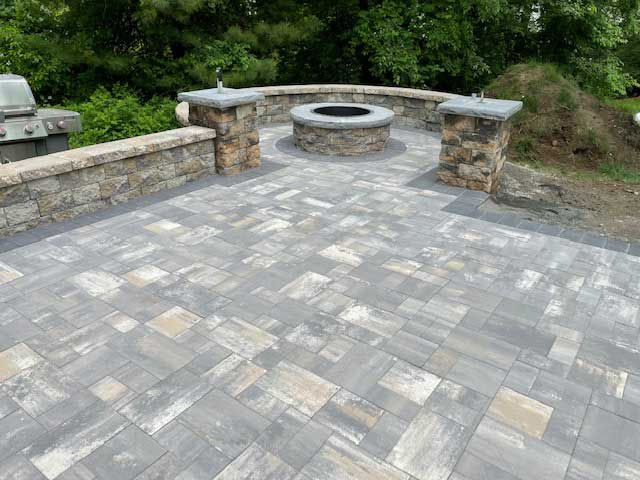
Residential Paver Driveway Installation, Long Island, NY


LOCATION
Long Island, NY — Residential Property
CLIENT TYPE
Residential Homeowner — Single-Family Property
PROJECT TYPE
Full Driveway Paver Installation — New Construction
TOTAL PAVED AREA
780 sq ft
PAVER MATERIAL
60mm interlocking concrete pavers — charcoal/gray blend with contrasting soldier course border
BASE SECTION
8" compacted aggregate base · 1" sand setting bed · 60mm pavers · Polymeric sand joints
EDGE RESTRAINT
Concrete perimeter edging — full driveway perimeter
A residential driveway paver installation is one of the most detail-intensive hardscape projects we take on — the finished result is immediately visible from the street and there is no margin for an uneven base or inconsistent joint pattern.
This Long Island residential driveway installation started with full excavation to the correct depth and grade — the finished paver surface has to drain away from the garage and away from the house foundation, which means grade control starts below the ground, not at the paver surface.
Eight inches of compacted aggregate base went down in two lifts, each compacted before the next was applied. A one-inch sand setting bed was screeded level across the full driveway footprint. Sixty-millimeter interlocking concrete pavers in a charcoal and gray blend were laid in a running bond pattern with a contrasting soldier course border along the full perimeter.
The soldier course is the detail that separates a finished-looking paver installation from one that looks assembled. It creates a clean visual frame around the field pattern and, more importantly, provides the edge restraint that keeps the field pavers from migrating outward over time under vehicle load.
Polymeric sand was swept into all joints and activated with water — this hardens the joint material and significantly reduces weed intrusion and ant activity between pavers. The finished driveway is immediately functional and provides decades of service when properly maintained.

WHAT OUR CLIENTS SAY
4.6 out of 5 Google Reviews
Based on 10 Google reviews · Verified through Google Business Profile
Nick Russo
President, O'Keefe Court Condominium Board
2024
Fiorini Paving did an excellent job repaving the parking lot at our condo facility. As president of the board, I was involved in reviewing multiple proposals, and Fiorini impressed us with their professionalism, responsiveness, and attention to detail from start to finish. The quality of the work was top notch, and they followed up after completion to ensure everything was holding up well. We're very satisfied with the results and would highly recommend Fiorini Paving for any paving or asphalt work.
Verified Google Review
Valerie McDermott
Car Dealership, Long Island, NY
September 2021
Verified Google Review
We are a car dealership, it is a huge challenge to navigate a paving project with all the vehicles on site. Not for these guys. ABSOLUTELY A++. They were excellent at communicating exactly what needed to be done in order for the entire project to go smoothly. The parking lot looks amazing and our drain issues solved!
Matthew Vitiello
Long Island, NY
March 2021
The guys at Fiorini Paving really did a phenomenal job for us. Not only did the quality of work exceed our expectations but they were also very easy to work with throughout the whole process. I highly recommend them.
Verified Google Review
AE Ealy
Local Guide · Long Island, NY
2024
Verified Google Review
Great price. They did a very good job. The crew was very professional. Everyone was respectful. They quoted a price, gave a deadline date to complete the job and came through. Highly recommend them.
COMMON QUESTIONS
Paver Installation Questions, Straight Answers
Pavers sink because the base underneath wasn't built correctly. Suffolk County has sandy, loamy soil — especially in areas like West Babylon and Deer Park — and that soil shifts over time. If the excavation wasn't deep enough or the gravel base wasn't compacted in layers, the surface fails. A driveway needs 12 to 14 inches of excavation. A patio needs 6 to 8 inches. Skipping depth is the number one reason pavers fail within a few years.
A typical driveway installation takes two to four days from start to finish. A patio or walkway usually wraps up in one to two days. Weather plays a role — we won't install on frozen ground or when rain is coming within 24 hours of joint sand application. We walk you through the schedule before we start so you know exactly what to expect.
In most cases, no — and we wouldn't recommend it. Installing pavers over an existing surface skips the base preparation that makes the whole system work. Without proper excavation and compaction you lose the drainage control and structural support that pavers depend on. The right approach is to remove what's there and build the base correctly from scratch.
It depends on your town and the scope of the project. Driveways and larger patios often require permits, especially if you're changing drainage patterns or expanding an impervious surface. We recommend checking with your local town building department and we can help point you in the right direction when you call us.
Concrete pavers handle Long Island's conditions well — individual units flex without cracking the whole surface. Natural bluestone is another strong choice next to the colonial and cape-style homes common across Suffolk County. The right material depends on how the surface is used and what your property looks like. We help you match the material to your property before anything gets ordered.
Yes — sealing enhances color, hardens the joint sand, and protects against moisture and staining. We typically recommend sealing 30 to 90 days after installation depending on the material. For properties near the South Shore where salt air is a factor, sealing is particularly important. Resealing every three to five years keeps the surface performing and looking its best.

READY TO GET STARTED?
Get a Free Paver Installation Estimate in Suffolk County
Call us directly or submit an estimate request and we'll get back to you within one business day. Paver installation and sealing for driveways, walkways, patios, and entryways across Suffolk County and Nassau County — own crews, own equipment, proper base every time.
Free estimate .
No obligation .
Response within 1 business day