ASPHALT REPAIR & PATCHING IN SUFFOLK COUNTY
Crack Filling & Sealing in Suffolk County, Close the Door Before Water Gets Underneath.
Hot-applied crack filling and sealing for commercial parking lots and driveways across Suffolk County and Nassau County — the most cost-effective maintenance step before a small crack becomes a full repair job.
4.6/5 Google Rating
· BBB A+ Since 2012
· Licensed in Suffolk & Nassau County
BBB A+ Accredited
Since 2012
Dan's Best of the Best
2025 Winner
Suffolk County Licensed
Contractor License
Nassau County Licensed
Contractor License
Fully Insured
General Liability + Workers Comp
WHAT CRACK FILLING DOES
A Crack in Your Pavement Is an Open Door, Every Long Island Winter Makes It Wider
Cracks aren't just cosmetic problems. They're open doors for water, roots, and freeze-thaw damage to break your asphalt apart from the inside. Suffolk County averages dozens of freeze-thaw cycles every winter — one of the main reasons pavement fails faster here than in warmer states. Water gets into a crack, freezes overnight, expands by roughly nine percent, and widens the crack by morning. By spring, what started as a hairline is a pothole.
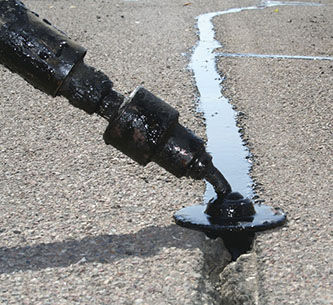
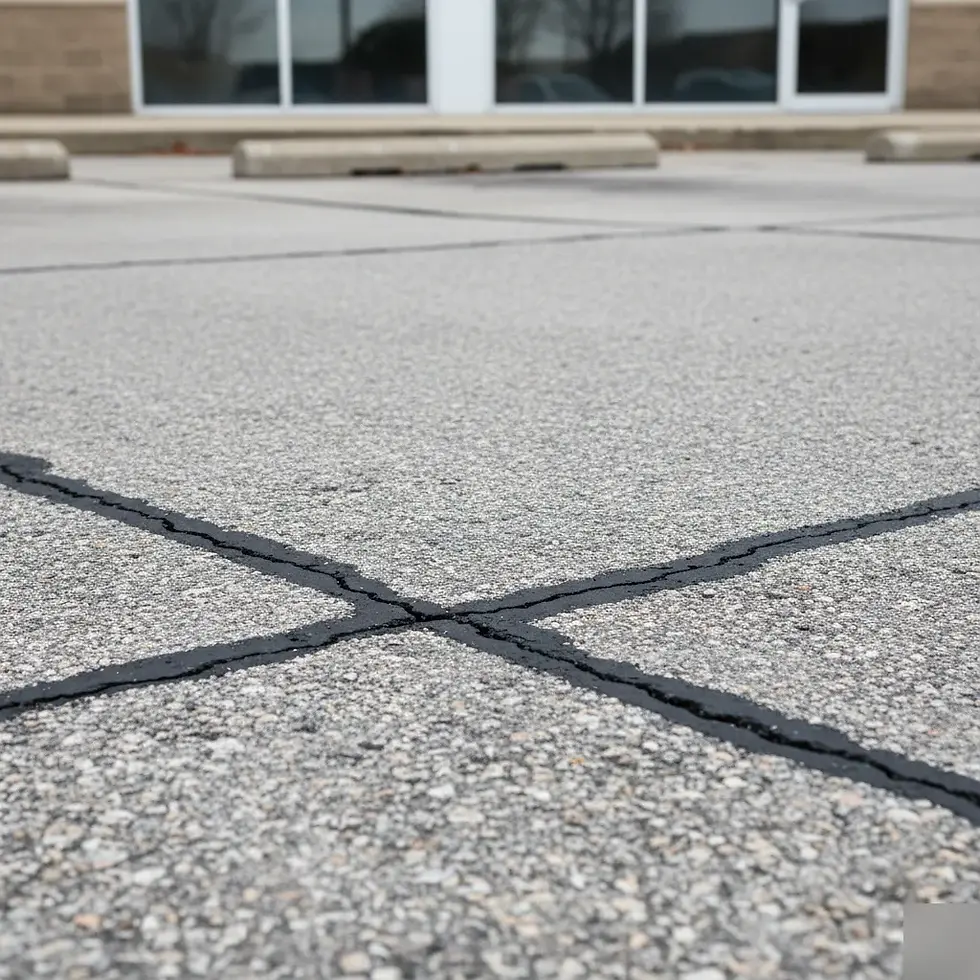
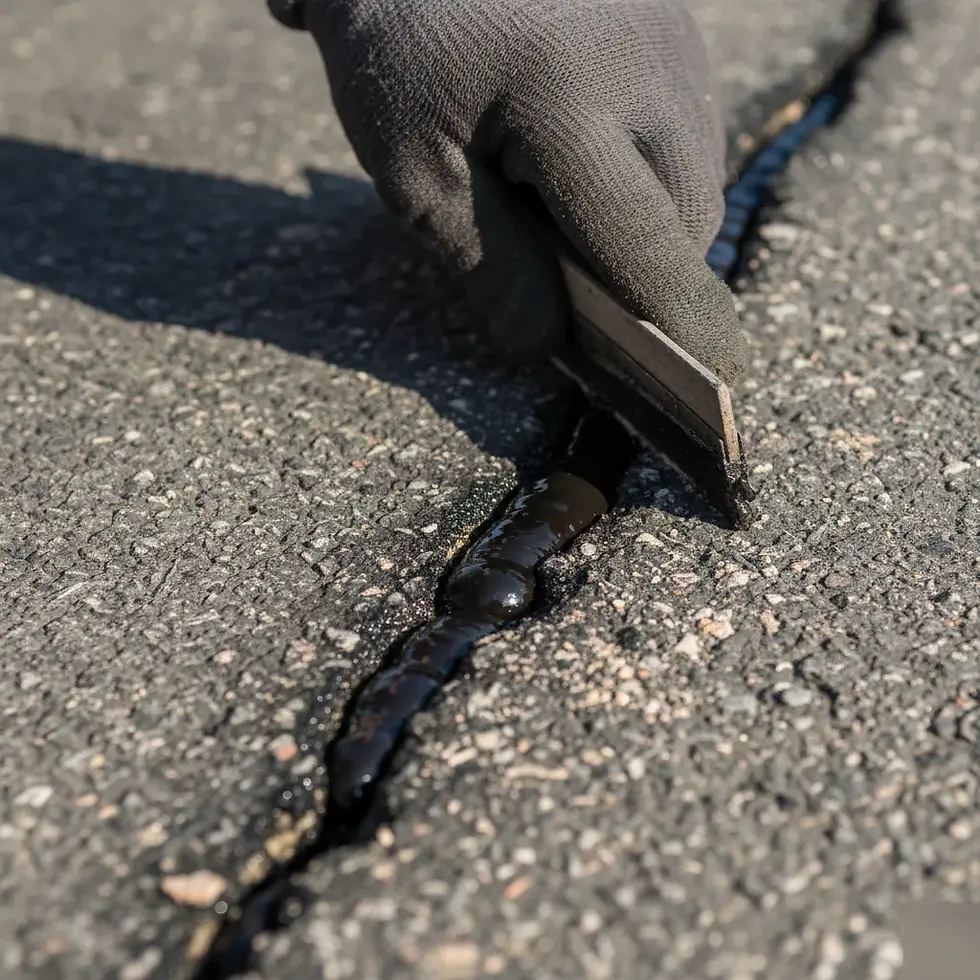
Crack filling seals the crack with a hot-applied rubberized material that bonds to the asphalt on both sides. It stays flexible — moving with the pavement through temperature changes. Water can't get in. Roots can't push through. The base layer stays protected.
An unfilled crack that admits water will often develop into a pothole within one to three seasons. A filled crack can hold for years if the surrounding pavement is still structurally sound. You're not just fixing a line in your driveway or parking lot — you're buying time for the entire surface.
The right time to fill cracks is when they're between a quarter inch and one inch wide. Narrower than that, and the filler material can't bond properly. Wider than that, and the structural damage underneath may need patching instead. Our crews check every crack before applying material — we don't fill cracks that need patching, and we don't patch areas that only need filling.
KNOW WHAT YOU HAVE
Four Crack Types, What Each One Means and How It Gets Treated
Not every crack gets the same treatment. Our crew identifies the type before any material goes down.
Edge Cracks
CRACK FILLING ✓
Cracks along the borders of driveways and parking lots — common in West Babylon and Deer Park where drainage runs toward the pavement edge. Usually caused by lack of lateral support. Filling plus sealcoating at the edge stops the inward spread.
Linear & Longitudinal Cracks
CRACK FILLING ✓
Cracks running along or across the pavement surface — caused by UV oxidation, temperature stress, or ground movement. The most common crack type on Long Island driveways and parking lots. Ideal candidates for hot-pour crack filling when caught early.
Early-Stage Alligator Cracking
ASSESS FIRST
The web-pattern crack indicating base stress. Early-stage alligator cracking in a limited area can be treated with crack filling to slow progression. Advanced alligator cracking across a large area means the base has failed — crack filling won't hold and patching or resurfacing is required.
Reflection Cracks
FILLING + MONITOR
Cracks that reappear through a repaved surface from the structure below. Common where older pavement has been overlaid. Can be filled, but the underlying movement needs to be monitored — if the crack returns quickly, the base issue needs to be addressed directly.
The Best Time to Fill Cracks on Long Island Is Fall — Before the First Freeze
Filling cracks in the fall — before temperatures drop below 50°F — gives you the best result and the most protection. Here's why.
Hot-pour crack filler needs to be applied when the pavement is warm and dry. The material bonds most effectively when surface temperatures are above 50°F. In the fall, cracks are at their narrowest — pavement contracts in cold and expands in heat, so fall fills accommodate the widest range of seasonal movement.
Most importantly — filling before the first freeze breaks the cycle entirely. Water can't get into a sealed crack. No water means no freeze-thaw expansion. No expansion means the crack stays sealed through the winter instead of widening with every cold snap.
Homeowners in West Islip and Babylon who call us in October consistently see better results than those who wait until spring — when the damage from the winter is already done.
WHERE IT FITS
Crack Filling Is Step One in the Asphalt Maintenance Sequence, Here's the Full Order
Done in the right order, these three steps extend asphalt life by years. Done out of order, money is wasted and the work fails prematurely.
01
Crack Filling First
Fill every active crack before anything else. Sealing or patching over open cracks means the surface has no continuous bond — both fail within a season. Crack filling creates the solid, continuous surface everything else depends on.
Signs Your Pavement Needs Crack Filling Now
Look for these on your surface:
Cracks wider than a quarter inch
Crumbling or oxidized crack edges
Dark staining around crack lines (oil or water infiltration)
Vertical separation between pavement sections
Cracks near tree roots in older neighborhoods like Huntington Station
Standing water collecting along crack lines after rain
Cracks appearing at parking stall lines or drainage edges on commercial lots
When to act:
Check your pavement twice a year — once in spring after the ground thaws, once in fall before the first freeze.
Fall is the priority window. Catching active cracks in October means they get sealed before the first freeze-thaw cycle of the season. Wait until spring and the winter has already done its damage.
After the first hard frost, walk the surface. Overnight freezing turns small cracks into larger ones fast — what you see in November will be worse in March.
WHY FIORINI PAVING
The Crack Filling Contractor Long Island Properties Trust
35+
Years on Long Island
Crack filling and pavement maintenance across Suffolk County since the late 1980s. We know exactly what Long Island freeze-thaw cycles do to untreated cracks — and we've been sealing them before they become potholes for over three decades.
180+
Miles of Asphalt Laid on Long Island
More than 180 miles of asphalt laid across Suffolk County and Nassau County — commercial parking lots, driveways, access roads, municipal paths, and private community roads. Every mile with our own equipment and our own crew.
1,500+
Properties Served Across Long Island
From commercial parking lots and industrial facilities to HOA communities and substantial residential properties — 1,500-plus Long Island properties served with our own crews and our own equipment since the late 1980s.
COMMON QUESTIONS
Crack Filling Questions, Straight Answers
Yes — it's one of the biggest reasons Suffolk County pavement fails faster than in warmer states. Water gets into a crack, freezes overnight, and expands by roughly nine percent. When it thaws, the crack is wider than before. This happens dozens of times every winter on Long Island. Filling cracks in the fall — before the first hard freeze — stops that cycle before it starts. Waiting until spring means the damage is already done.
The right range is between a quarter inch and one inch wide. Narrower than that, the filler can't bond properly inside the crack. Wider than that, the damage underneath may need patching instead. Our crews measure and check every crack before applying material — you won't get filler pushed into a crack that needs a different repair.
Always — crack filling comes before sealcoating every time. Applying sealcoat over open cracks bridges the gap without bonding into it. That bridge fails quickly. When cracks are filled first, the sealcoat has a solid, continuous surface to adhere to. The finished result lasts longer and looks more uniform. This is the sequence our crews follow on every job.
Crack filling can treat early-stage alligator cracking before it spreads, but it can't fix alligator cracking that has already broken the base underneath. Once the base shifts, you need patching or resurfacing — not crack filling. Our crews check the condition before any work starts. If filling is the right call, we do it. If you need something more, we tell you that upfront.
Your crew walks the full surface first and checks every crack before any material goes down. They identify what needs filling and whether anything looks like it needs patching instead. Then they clean out the cracks, apply the filler, and let it set. The whole process is straightforward — you don't need to be present the entire time, but clear the surface of vehicles before they arrive.
We typically schedule crack filling within a few days of your call. The best time to call is before temperatures drop in the fall — that's when demand picks up fast. If you're seeing cracks now, don't wait. Call (631) 643-2443 and we'll get you on the schedule before the next freeze does more damage.
Yes — commercial parking lots across Suffolk County are a significant part of our crack filling work. Commercial lots tend to crack in specific patterns — along parking stall lines, near drainage edges, and at joints between older paving sections. A regular crack filling maintenance schedule keeps a commercial lot from deteriorating into a patchwork of repairs that costs far more to fix later.

READY TO GET STARTED?
Get a Free Crack Filling Estimate in Suffolk County
Call us directly or submit an estimate request and we'll get back to you within one business day. Crack filling and sealing for commercial parking lots, driveways, and municipal properties across Suffolk County and Nassau County — own crews, own equipment, no subcontractors.
Free estimate .
No obligation .
Response within 1 business day