ASPHALT MILLING IN SUFFOLK COUNT
Asphalt Milling in Suffolk County, Remove the Failed Surface. Keep the Sound Base. Pave It Right.
Cold planing and surface removal for commercial parking lots, driveways, and roads whose surface has failed but whose base is still worth saving — recycled material, own equipment, no subcontractors.
4.6/5 Google Rating
· BBB A+ Since 2012
· Licensed in Suffolk & Nassau County
BBB A+ Accredited
Since 2012
Dan's Best of the Best
2025 Winner
Suffolk County Licensed
Contractor License
Nassau County Licensed
Contractor License
Fully Insured
General Liability + Workers Comp
WHY MOST ASPHALT FAILS EARLY
When the Surface Has Failed But the Base Is Still Good, Milling Is the Right Fix
Cracked, rutted, or uneven pavement doesn't just look bad — it gets worse every season. Suffolk County roads, parking lots, and driveways take a beating from freeze-thaw cycles, heavy traffic, and salt-heavy winters. When the surface has failed but the base beneath it is still structurally sound, tearing everything out and starting over isn't the answer. Asphalt milling is.
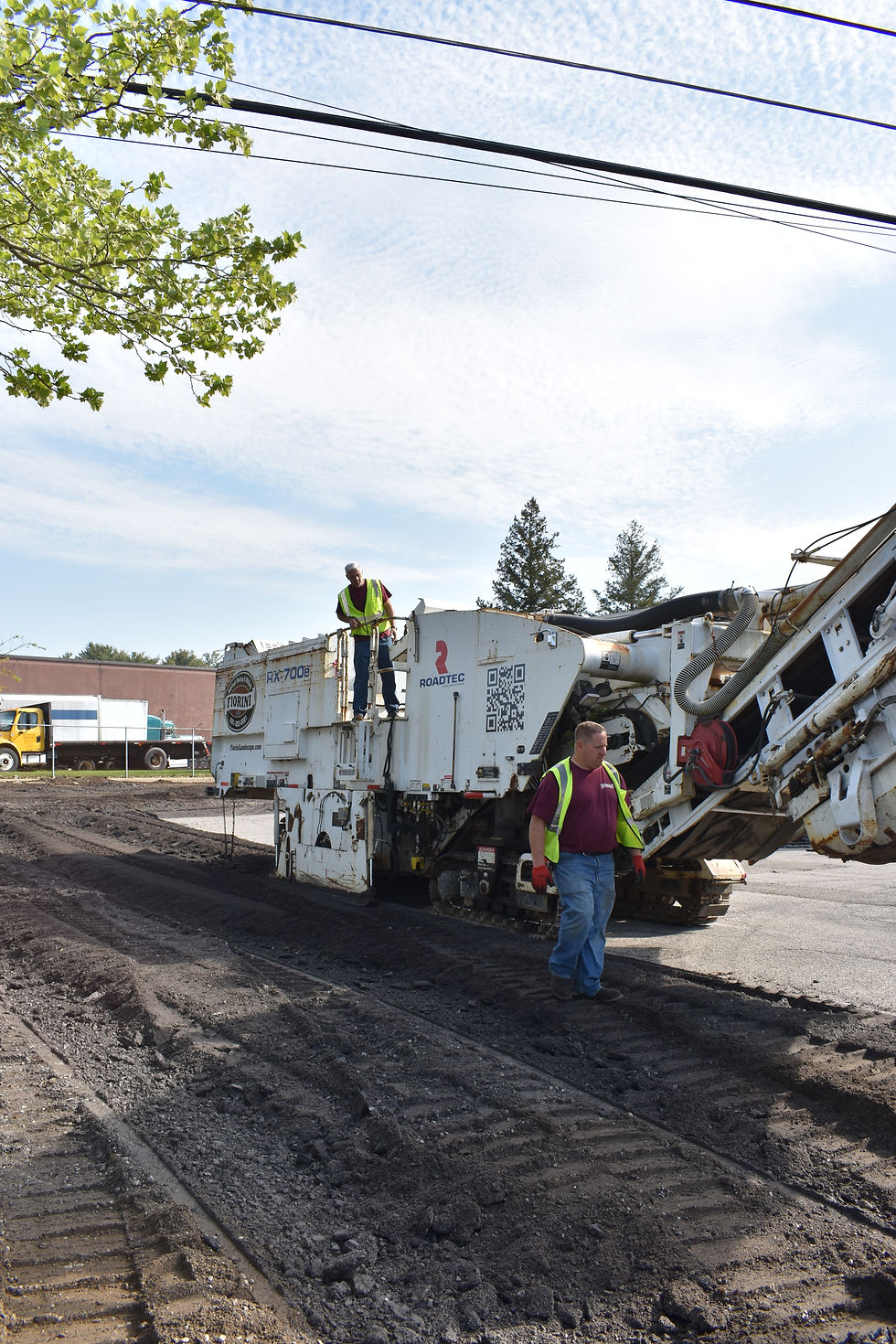
Milling removes the top layer of damaged asphalt — typically one to three inches — using a cold planer machine with rotating carbide teeth. The drum grinds down the failed surface at a precise, controlled depth. The stable base underneath stays untouched. The milled surface is left with a grooved, rough profile that gives new asphalt something to mechanically bond to — unlike a smooth, oxidized surface that an overlay can peel away from within a season.
What comes off the ground isn't wasted. The reclaimed asphalt pavement — called RAP — gets transported to local asphalt plants where it's recycled back into new asphalt mix. A closed loop that keeps debris out of Suffolk County landfills, reduces the demand for virgin aggregate, and lowers material costs on your project. We take environmental responsibility on Long Island seriously — recycling milled material through local plants is how we ensure minimal impact on our community while maintaining the highest quality product.
THE COMPLETE PAVING PROCESS
Where Milling Fits in a Full Commercial Paving Project
Milling isn't a standalone job — it's a critical step in the sequence that determines whether your new pavement lasts 20 years or 5. Here's the full process, and where milling sits in it.
01
Site Assessment
Every project starts here — not with a phone quote. We walk the property, assess surface conditions, drainage patterns, base integrity, soft spots, and grade. Suffolk County soil varies significantly: sandy soils near Brookhaven behave differently from clay-heavy soils in Brentwood. That assessment determines whether milling, full replacement, or targeted repair is the right call.
02
Site Preparation & Grading
Before anything is removed or laid down, the site gets prepared. Utility covers are marked, drainage points identified, and any base issues are noted for correction during the milling phase. For larger commercial projects, grading and drainage correction happen at this stage.
03
Milling — Removing the Failed Surface
This is the step that determines whether your new pavement holds up or fails prematurely. Our cold planer grinds out the damaged surface layer to a precise depth, corrects grade problems, addresses drainage issues, and creates the rough mechanical bond profile the new asphalt needs to adhere correctly. The milled material is transported to local asphalt plants and recycled into new mix — nothing goes to landfill. Milling takes hours, not days — leaving the sound base intact means we're not hauling out a full pavement section.
04
Base Repair & Compaction
With the failed surface removed, any soft spots, drainage failures, or compromised base sections are repaired and compacted before new asphalt goes down. This is the last chance to correct base problems at the right cost — fixing base issues after paving is exponentially more expensive.
05
Asphalt Paving
Hot-mix asphalt goes down at the correct depth for the traffic load, in the correct lifts, at the right temperature. Rolled in multiple passes for proper compaction. The milled surface profile ensures maximum adhesion between the base and the new overlay — the bond that makes the difference between pavement that lasts 20 years and pavement that starts delaminating after two winters.
06
Line Striping & Final Inspection
Once the asphalt has cured — typically a few days after installation — line striping, ADA space layout, directional markings, and fire lane striping are applied. A final walkthrough confirms drainage is flowing correctly, every edge is tight, and the surface is ready for full traffic load.
WHEN MILLING IS THE RIGHT CALL
Four Signs Your Surface Has Gone Past the Point Where Repair Will Hold
Patching and crack filling have a limit. These are the signs your surface has crossed it — and milling is the only fix that lasts.
Rutting Deeper Than an Inch
Ruts are channels worn into the asphalt by repeated traffic. Water pools in them, ice forms in them every winter. Once ruts exceed an inch in depth, a new overlay laid on top will mirror the same deformation within a season. Milling removes the damaged layer down to stable base and gives the replacement surface a flat, uniform foundation.
Widespread Alligator Cracking
When alligator cracking — that web pattern indicating base stress — covers more than 25% of your surface, patching won't hold. The base movement that caused the cracking is still happening. Milling removes the failed surface layer so the underlying issue can be addressed before new asphalt goes down. In Commack and Hauppauge, where commercial lots see heavy truck traffic, this is one of the most common milling triggers we see.
Surface Too High at Curbs or Drains
Multiple overlays raise the pavement grade above curb stops, drainage inlets, and ADA ramps — creating both a code compliance problem and a drainage problem. We see this regularly in Brentwood and older commercial corridors across Suffolk County. Milling brings the surface back to correct elevation so water drains properly and ADA grades are met.
Grade Problems Trapping Water
Low spots where water pools after every rain tell you the surface grade has failed. Laying a new overlay over those low points just buries the problem — it returns within a season. Milling lets us re-establish correct pitch across the surface before new asphalt goes down, so water flows where it's supposed to.
Recycled Asphalt, How We Keep Milling Environmentally Responsible on Long Island
When our milling machine grinds up your old asphalt surface, that material doesn't go to a landfill. The reclaimed asphalt pavement — called RAP — is loaded and transported directly to local Long Island asphalt plants where it's processed and recycled back into new hot-mix asphalt.
This is a closed loop. The material that comes off your parking lot in Hauppauge this week becomes part of the asphalt mix going down on another Long Island property next week. Recycling RAP reduces the demand for virgin aggregate, cuts down on truck miles hauling raw materials, and keeps thousands of tons of material out of Suffolk County landfills every year.
Using local plants also means we maintain strict quality control over the recycled material. The mix proportions, RAP percentage, and binder content are all engineered to New York State DOT standards — the same standards used on state roads. You get a sustainable product that doesn't compromise on performance or longevity.
We take our responsibility to Long Island's environment seriously. Milling and recycling is how professional paving gets done — and it's been part of how Fiorini operates for decades.


What to Expect Before and During a Milling Job on Your Suffolk County Property
Start by clearing the surface completely — vehicles, dumpsters, trailers, and equipment need to be off the pavement before our crew arrives. We regularly arrive at commercial lots in Ronkonkoma to find forklifts or delivery trucks parked on the section we need to mill. Every hour we wait costs you time on your project.
Mark anything below the surface that could affect our depth of cut — utility covers, catch basins, valve boxes, and cleanout caps. A quick walkthrough with our crew before we begin takes ten minutes and prevents expensive surprises.
Have someone with decision-making authority reachable on the day of the job. Questions come up in the field — property lines, depth adjustments, something unexpected in the base. Our crew is self-performed with our own people and equipment, but they still need your input when site conditions differ from the original assessment.
Plan for what comes after milling. A freshly milled surface is drivable but rough — it tracks material onto surrounding pavement, shoes, and tires. We keep the gap between milling and paving as short as your schedule allows. Most property owners are surprised by how quickly we turn jobs around — we've completed hundreds of milling projects across Suffolk County and schedule aggressively to minimize exposure time.
WHY FIORINI PAVING
The Milling Contractor Long Island Properties Trust
35+
Years on Long Island
Milling commercial parking lots and driveways across Long Island since the late 1980s. We know exactly what Long Island's soil conditions, freeze-thaw cycles, and traffic loads do to asphalt — and what needs to happen before new pavement goes down.
180+
Miles of Asphalt Laid on Long Island
More than 180 miles of asphalt laid across Suffolk County and Nassau County — commercial parking lots, driveways, access roads, municipal paths, and private community roads. Every mile with our own equipment and our own crew.
1,500+
Properties Served Across Long Island
From commercial parking lots and industrial facilities to HOA communities and substantial residential properties — 1,500-plus Long Island properties served with our own crews and our own equipment since the late 1980s.

COMMON QUESTIONS
Asphalt Milling Questions, Straight Answers
Milling is the right call when your pavement has ruts deeper than an inch, widespread alligator cracking, or grade problems that trap water after rain. A basic overlay won't fix those issues — it buries them. Suffolk County's freeze-thaw winters make bad drainage worse every season. If you've already overlaid the surface more than once, or if water sits on your lot after rain, milling is likely what you actually need. We'll tell you straight after a free on-site assessment.
The milled material — reclaimed asphalt pavement or RAP — gets transported directly to local Long Island asphalt plants where it's recycled back into new hot-mix asphalt. Nothing goes to landfill. This keeps debris out of Suffolk County landfills, reduces demand for virgin aggregate, and lowers material costs. The recycled mix meets NY State DOT material standards — the same quality used on state roads.
Yes — milling lets us correct grade problems that an overlay would just cover up. We mill to the correct depth, re-establish the proper drainage slope, and then pave over a correctly pitched surface. Water flows where it's supposed to instead of sitting and freezing every winter. If your lot has had standing water for years, that grade problem must be corrected before any new asphalt goes down.
Milling is significantly faster than full-depth removal because we're only removing the failed surface layer — the sound base stays in place. Most commercial milling jobs in Suffolk County are completed in a single day. For large lots in Hauppauge or Brentwood that can't shut down for days, that speed matters. Timeline depends on lot size and conditions — call us at (631) 643-2443 for a straight answer.
Yes — and this is a common problem on older commercial lots across Suffolk County. Multiple overlays raise the pavement above curb stops, drainage inlets, and ADA ramps — creating both a code violation and a drainage failure. We see it regularly in Brentwood. Milling brings the surface back to correct elevation so the new overlay drains properly and meets ADA grade requirements. It's a compliance fix as much as a pavement fix.
Never. We run our own cold planer machines with our own crew — no subcontractors, no handoffs. We control the milling depth, drum speed, and grade throughout the entire job. The crew that does the assessment is the crew operating the equipment. One point of contact from the first call to the finished surface.
It's genuinely recycled — not a marketing claim. The RAP from every Fiorini milling job is delivered to local Long Island asphalt plants that process it back into new asphalt mix at engineered proportions. This is standard practice in professional paving — RAP typically makes up 20-30% of new hot-mix asphalt by weight. The result is a sustainable product that performs to the same standard as virgin mix.
READY TO GET STARTED?
Get a Free Milling Assessment in Suffolk County
Call us directly or submit an estimate request and we'll get back to you within one business day. We handle asphalt milling, recycling, and full paving sequences for commercial, municipal, and residential properties across Suffolk County and Nassau County — own equipment, zero subcontractors, zero landfill waste.
Free estimate .
No obligation .
Response within 1 business day